
During the ICAR Foundation Day 2025 held on 16-07-2025 at NASC Complex, Pusa, New Delhi, five technologies of ICAR – DCR, Puttur are certified under Horticulture SMD by the Indian Council of Agricultural Research, New Delhi and the details of the technologies are as follows;
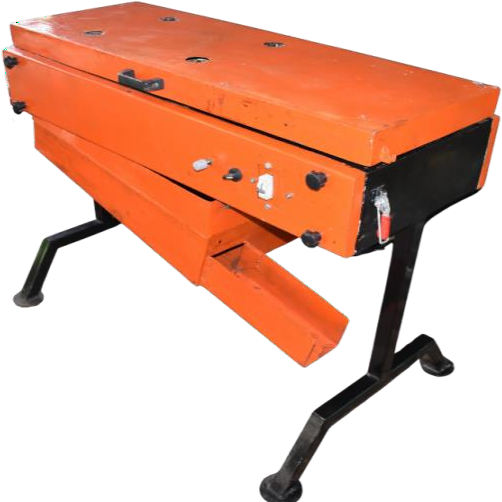
- Portable semi-automatic cashew apple and nut separator with twisting mechanism: (Developed by Dr. Manjunatha K, Dr. Ravindra Naik, Dr. D Balasubramanian, Dr. J Dinakara Adiga) :
A portable semi-automatic cashew apple and nut separator prototype was also developed, featuring a twisting mechanism. This machine comprises of main frame, a prime mover, a power transmission system, and a nut separating mechanism. The overall length, width and height of the semi-automatic cashew apple and nut separator were 1170, 705 and 925 mm, respectively. Performance evaluations revealed an average separation capacity of 29.48 kg h-1 with a separation efficiency of 91.45%.

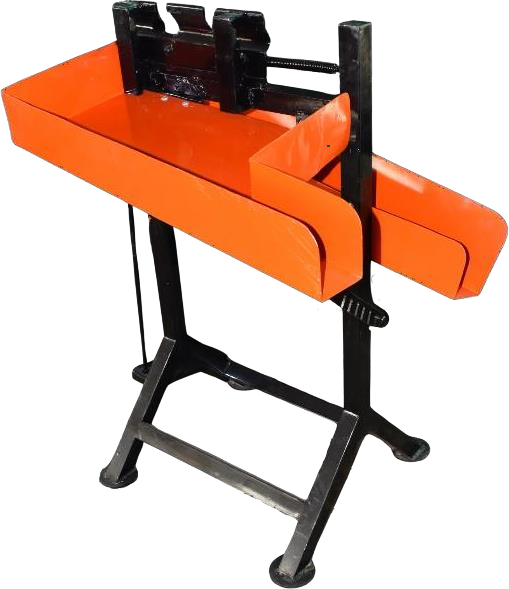
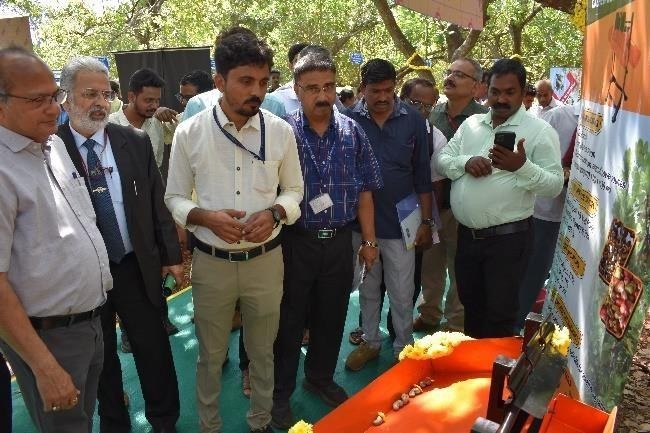
2. Portable pedal operated shear type cashew apple and nut separator:(Developed by Dr. Manjunatha K, Dr. Ravindra Naik, Dr. D Balasubramanian, Dr. J Dinakara Adiga)
A prototype pedal-operated cashew nut and fruit separator was designed and developed. The machine consists of a main frame, shear cutting blades, a spring-retractable mechanism, and separate outlets for nuts and apples. The overall length, width and height of the nut separator were 770, 771 and 1030 mm, respectively. Performance evaluations showed that the pedal-operated separator has an average separation capacity of 15.0 kg h- 1 (RCN) with a separation efficiency of 82.74%. The nut damage was found to be less than 5%, making it an effective and farmer-friendly solution.
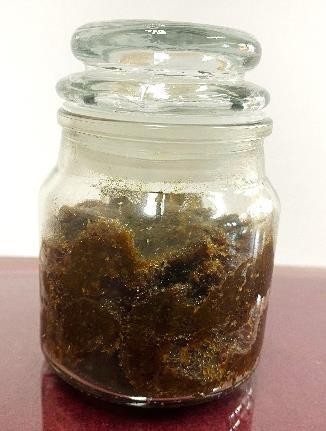
3. Cashew Prash- A product from cashew apple: (Developed by Dr. Jyoti Nishad, Dr. Veena G L, Dr. Rajashekara H)
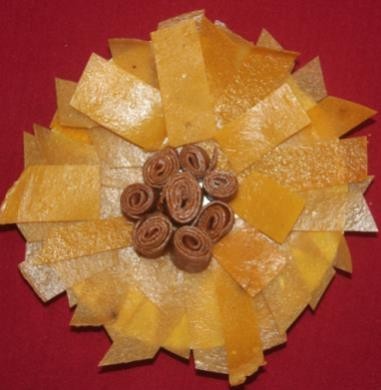
Cashew Prash is a nutraceutical rich formulation with cashew apples and spices as the main components. The product has polyphenols (620.23 mg GAE/100g), ascorbic acid (1.36 mg/100g) and crude fiber (1.48 per cent). It positions cashew apple as a powerhouse in promoting holistic well-being and meets the consumer demand of health promoting natural product.
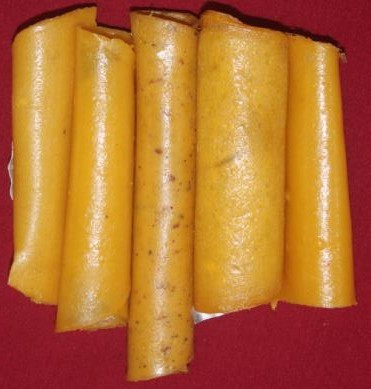
4. Cashew Apple Fruit Bar (Developed by Dr. Veena G L, Dr. J.D. Adiga, Dr. Shamsudheen. M., Dr. Preethi. P. Dr. Rajashekara. H, Dr. Manjesh. G N, Dr. Thondaiman. V, Dr. Aswathy. C)
Cashew apple is a season oriented and sensitive to deterioration even when stored under refrigeration condition. The level of consumption and utilization of cashew apple in food industries are very low and lower than that of cashew nut utilization and consumption. The utilization of cashew apple pulp and being incorporated with guava pulp, improved the nutritional and organoleptic qualities of the fruit bars. It was also evident that the incorporation of the cashew apple with guava pulp had no negative effect on its proximate composition; rather it had some positive effects like the increase in ash content. The fruit bar with 75% of cashew apple pulp and 25% guava pulp was highly preferred and accepted by the panelists among all other samples. This implies that 60 – 80% of cashew apple pulp could be used to produce fruit bars without having any negative impact on the consumer acceptability.
5. Leaf nutrient diagnostic norms in cashew: (Developed by Dr. Shamsudheen, M., M G Nayak, Dr. J.D. Adiga, Dr. Prabha Susan Philip, Dr. T.R. Rupa, Dr Babli Mog, Dr Veena G.L., Dr V. Srinivasan, Dr S.K. Behera)
Leaf nutrient diagnostic norms for cashew has been developed which will be useful for quick diagnosis of the nutrient requirement of cashew for devising rapid nutrient management schedule to improve the productivity. The optimal leaf nutrient status in cashew for nitrogen, phosphorus, potassium, calcium, magnesium and sulphur ranged from 1.35 to 1.56, 0.11 to 0.13, 0.63 to 0.91, 0.42 to 0.55, 0.21 to 0.28 and 0.56 to 0.75% respectively. The optimal leaf status for micronutrients such as iron, manganese, zinc, copper, boron and molybdenum ranged as 105.62 to 131.65, 43.74 to 92.06, 26.64 to 32.49, 15.09 to 17.59, 4.49 to 10.73 and 2.23 to 2.96 mg kg-1.
