History
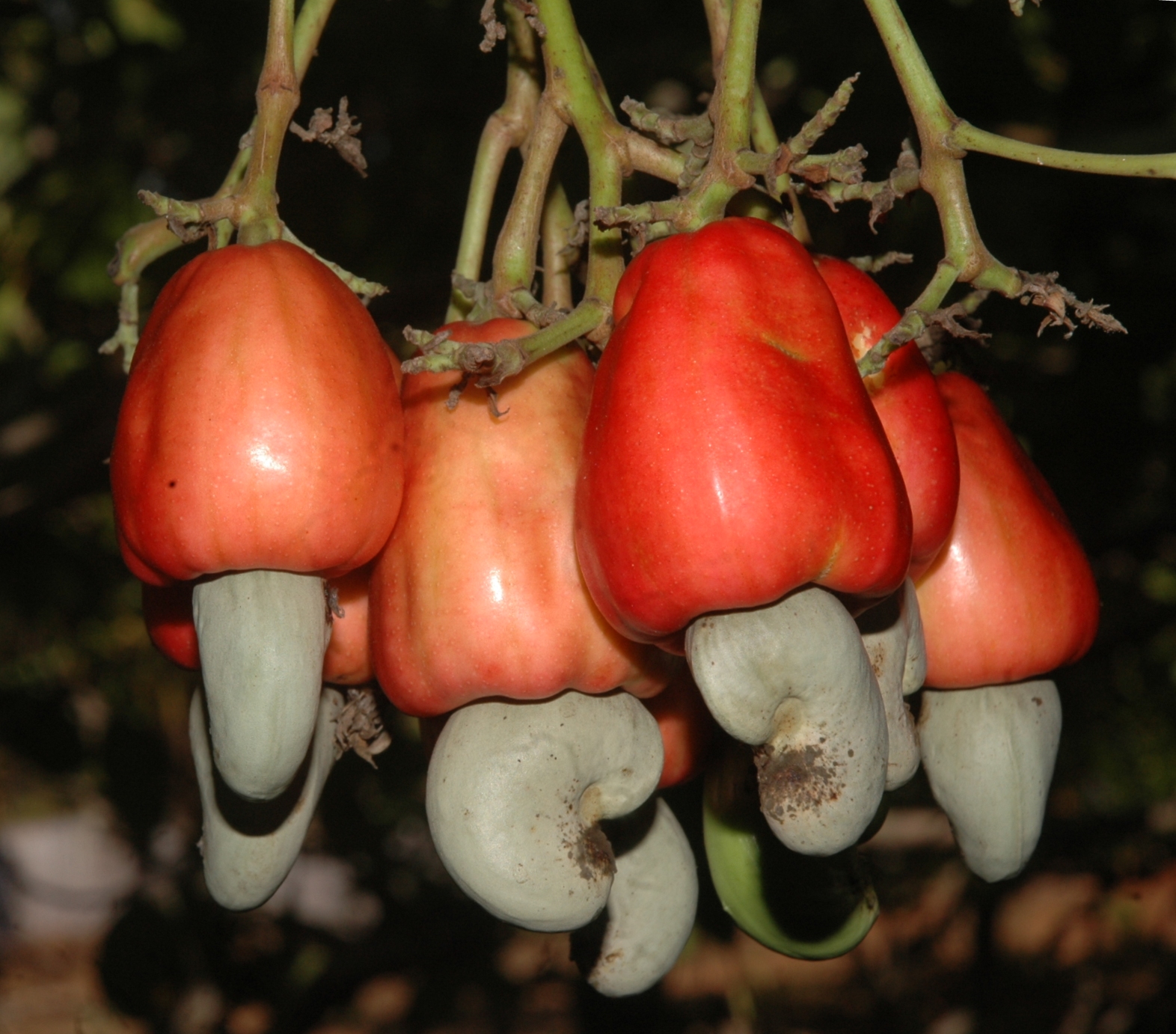 Cashew (Anacardium occidentale L.) is an introduced crop to India by the Portuguese in the 16th Century, which is a Native of Eastern Brazil. Cashew is a crop with high economic value and is earning considerable foreign exchange for the country. During the 1950’s the research on cashew was initiated. Ad hoc schemes for cashew research were sanctioned by the Indian Council of Agricultural Research (ICAR), which were located at Kottarakkara (Kerala), Ullal (Karnataka), Bapatla (Andhra Pradesh) and Vengurla (Maharashtra). In 1971, ICAR also sanctioned an All India Coordinated Spices and Cashew Improvement Project (AICS & CIP) with its headquarters located at ICAR-Central Plantation Crops Research Institute (CPCRI), Kasaragod. The CPCRI Regional Station, Vittal, Karnataka, was given the mandate to carry out research work on cashew, while four centres under different Universities (viz. Bapatla, Vridhachalam, Anakkayam and Vengurla) were assigned the research component on cashew under AICS & CIP. During the Vth and VIth plan periods, three more Centres (viz. Bhubaneswar, Jhargram and Chintamani) came under the fold of AICS & CIP and with the shifting of the work of Anakkayam Centre to Madakkathara.
The recommendations made by the Quinquennial Review Team (QRT) constituted by ICAR in 1982, the working group on Agricultural Research and Education constituted by the Planning Commission for the VII Plan Proposals and the Task Force on Horticulture constituted by ICAR resulted in the establishment of the National Research Centre for Cashew (NRCC) at Puttur on 18th June 1986. During the VIIth Plan period, AICS & CIP were bifurcated into two separate projects, one on cashew and another on spices. The headquarters of the independent AICRP on Cashew was shifted to the newly established NRCC, Puttur, in 1986. NRCC was upgraded and renamed as the Directorate of Cashew Research (DCR) by ICAR on 23 March 2009 under XI Plan. At present, the AICRP on Cashew is operating at 14 centres, which are distributed in major cashew-growing areas of the country. As per the instruction of ICAR-New Delhi, the prefix ICAR was added before the institute name since 2014.
Vision
Accomplishing self-sufficiency in raw cashewnut production and achieving the premier position as the largest producer, processor and exporter at the global level.
Mission
To promote overall growth through the enhancement of production and productivity in cashew
Mandate
- To undertake strategic, basic and applied research for enhancing productivity, quality, processing efficiency and value addition of cashew.
- To serve as a national repository of genetic resources and scientific information on cashew.
- To coordinate the All India Coordinated Research Project on Cashew (AICRP-C) for addressing location and region-specific problems.
- To promote capacity building through the transfer of technology and consultancy services to stakeholders.
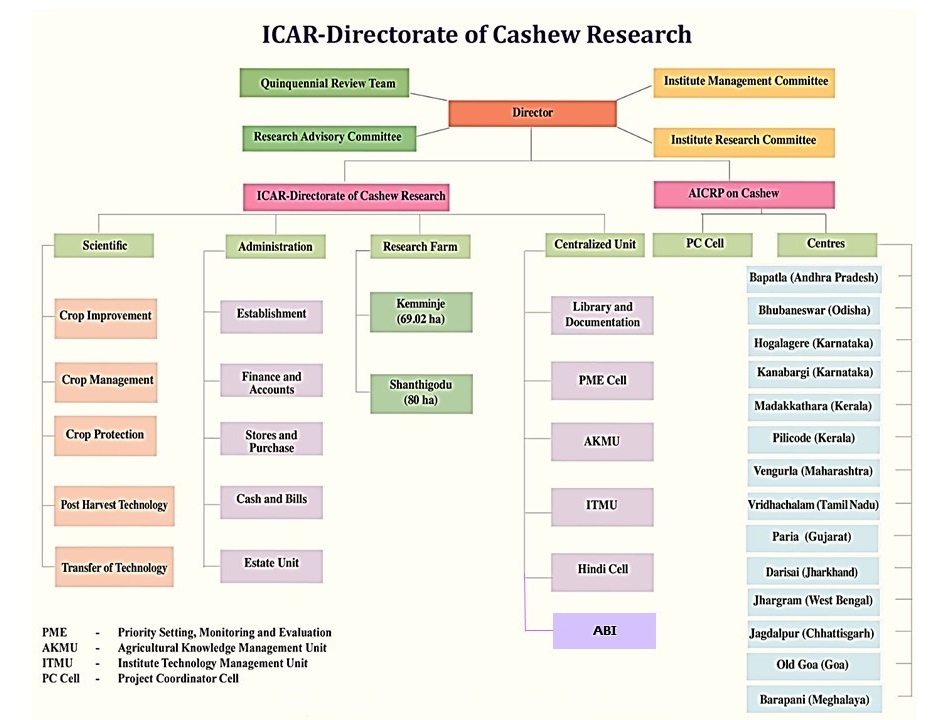
Organogram of ICAR-Directorate of Cashew Research
The Director is the administrative head of the Directorate. The Institute Management Committee (IMC), Research Advisory Committee (RAC) and Institute Research Committee (IRC) assist the Director in matters relating to the management and research activities of the directorate, respectively. The research and extension on various aspects of cashew are conducted in five sections, viz., Crop improvement, Crop management, Crop protection, Post-harvest technology and Transfer of technology. The institute also has different laboratories in Horticulture, Soil Science, Plant Breeding, Plant Physiology, Biotechnology, Plant Protection and Postharvest Technology sections. The other facilities available at the directorate include Audio Visual Laboratory, Priority Setting, Monitoring and Evaluation Cell (PME), Institute Technology Management Unit (ITMU), Agri Business Incubation Centre (ABIC), Agricultural Knowledge Management Unit (AKMU), Vigilance Cell, Women’s Cell, Library and Museum. The Directorate also functions as headquarters for the All India Coordinated Research Project on Cashew.
Budget
During the financial year (FY) 2024-25, the total budget allotted till December 2024 to the Directorate was Rs. 944.82 Lakhs, of which Rs. 684.99 Lakhs were utilised. Under externally funded projects, the total receipts were Rs. 68.44 Lakhs, of which Rs. 16.09 Lakhs was utilised. The revenue generation during FY 2024-25 was Rs. 71.50 Lakhs till December 2024.
Budget and expenditure details of DCR from April 2024- Dec 2024 (Rs. in Lakhs)
Receipts and expenditure under externally funded schemes at DCR for April 2024- Dec 2024 (Rs.inLakhs)
Infrastructure and assets
The major infrastructures developed during the year 2024-25, Insect-proof cum glass house was established for insect and disease screening under artificial conditions. The instrumental facilities like Laminar air flow cabinet, Compound microscope, Volatile collection unit, HPLC, GCMS, drones, sensors, software, a post-hole digger, a self-propelled power weeder, brush cutters, battery sprayers, tractor-operated aero-blast sprayers, a PPE kit, telescopic tree pruners, etc. These equipments were purchased to strengthen the laboratory to create advanced facilities funded by RKVY- RAFTAAR, Govt. of Karnataka.
Revenue generation at ICAR-DCR from April 2024 to December 2024 (Rs in Lakhs)
Production of planting material
ICAR-DCR has cashew nurseries at both of its campuses: Kemminje and Shanthigodu, accredited by the Directorate of Cashewnut and Cocoa Development (DCCD), Kochi, with a four-star rating to cater for the needs of planting material. Softwood grafts of varieties like Bhaskara, NRC Selection-2, Ullal-1, Ullal-3, Ullal-4, VRI-3, Madakkathara-2, Priyanka, Vengurla-7, Vengurla-4, Nethra Ganga, Nethra Jumbo-1, Nethra Ubhaya, Dhana, etc. are produced in the two nurseries between June and August, every year for supplying to the farmers. During the year 2024, a total of 1,99,490 cashew grafts were produced from Shantigodu (80000) and Kemminje (119490).