Self-reliance in cashew production is the need of the hour
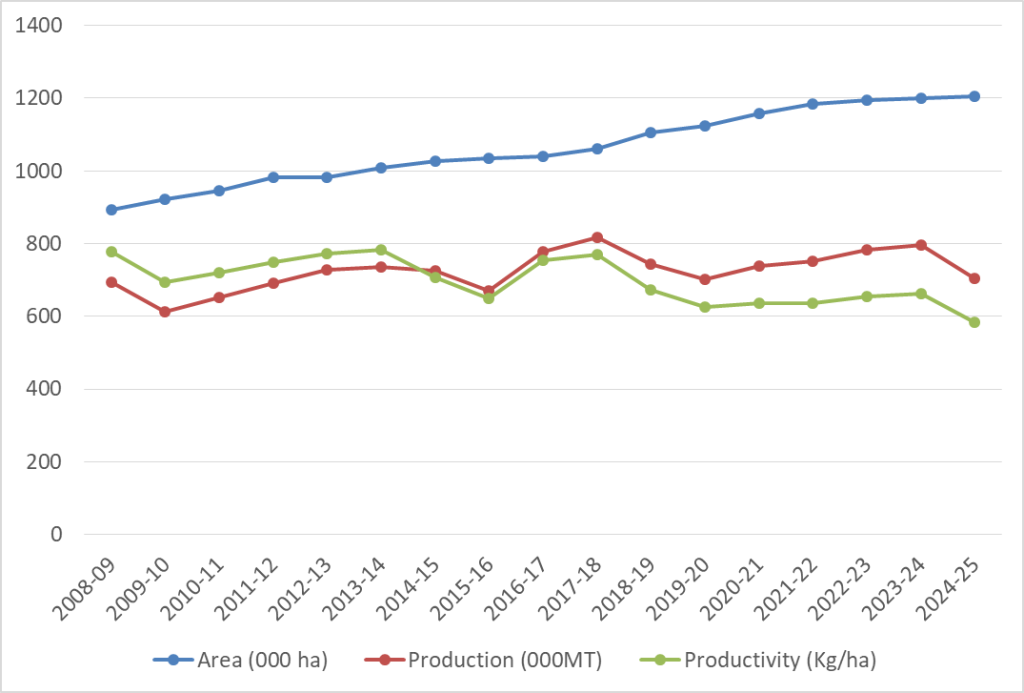
India’s cashew sector supports nearly four million (40 lakhs) people directly and indirectly through production, processing, and trade. Cashew cultivation in India currently occupies approximately 1.2 million (12 lakhs) hectares, spread predominantly across coastal regions of Odisha, Andhra Pradesh, Maharashtra, Tamil Nadu, Karnataka, Kerala, Goa and the North Eastern states (DCCD, 2024). However, it is now spreading across non-traditional areas, such as the plains of Karnataka, Chhattisgarh, Jharkhand, etc., reflecting the crop’s adaptability and potential role in poverty reduction.
India exported 65,808 metric tons of cashew kernels worth US$339 million (~300 crores) in the year 2023-24 (INDIASTAT, 2025). Despite being one of the world’s largest processors and exporters of cashew kernels, India remains heavily dependent on importing raw cashew nuts from African nations, such as the Ivory Coast, Benin, and Tanzania. This paradox of a developed processing industry coexisting with shortfalls in domestic production underscores the urgent need for a coherent strategy aimed at achieving self-sufficiency in cashew. The aspiration for self-reliance in cashew production aligns with the national vision of Atmanirbhar Bharat and with broader goals of agricultural sustainability, value addition, and rural employment generation.
India’s cashew sector has immense economic potential but faces pressing challenges. To sustain growth and remain competitive in the international market, strategies must focus on boosting productivity, promoting area expansion in suitable non-traditional regions, modernising cultivation and processing systems, as well as promoting trade. A coordinated approach involving cultivation, research, policy support, and industry participation is critical to strengthen the cashew value chain and regain India’s prominence in the global cashew economy.
Area, Production and Productivity of Cashew (2008-2024)