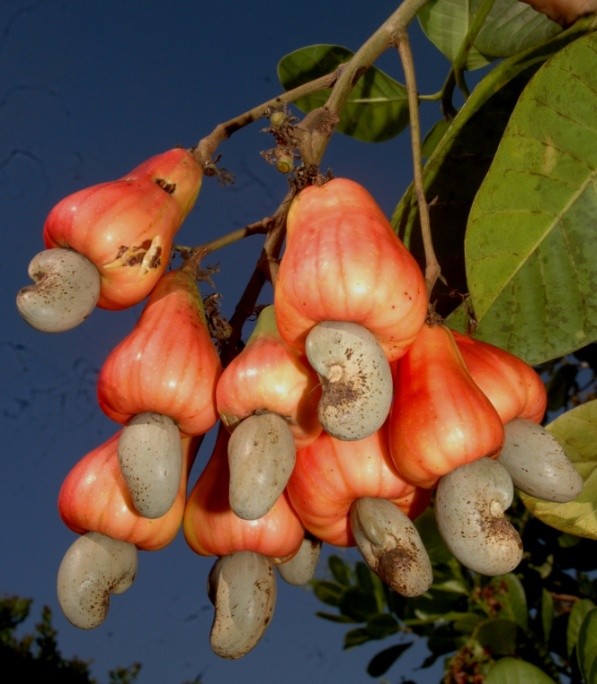
Cashew: The crop of choice for increasing the income of farmers
Cashew (Anacardium occidentale L.) was introduced to India by Portuguese travelers during 16th century. Initially it was deployed for soil and water conservation purposes and only during 1950s its prospect as a crop was realized. However, due to low price, its potential was not completely realized.
The crop has three produces viz. cashew nut, cashew apple and Cashew Nut Shell Liquid (CNSL). Its kernel is nutritionally rich and CNSL has industrial demand. The fruit is perishable but can be converted into many products such as jam, jelly, beverage, biofuel etc. that can improve the economy of farmers.
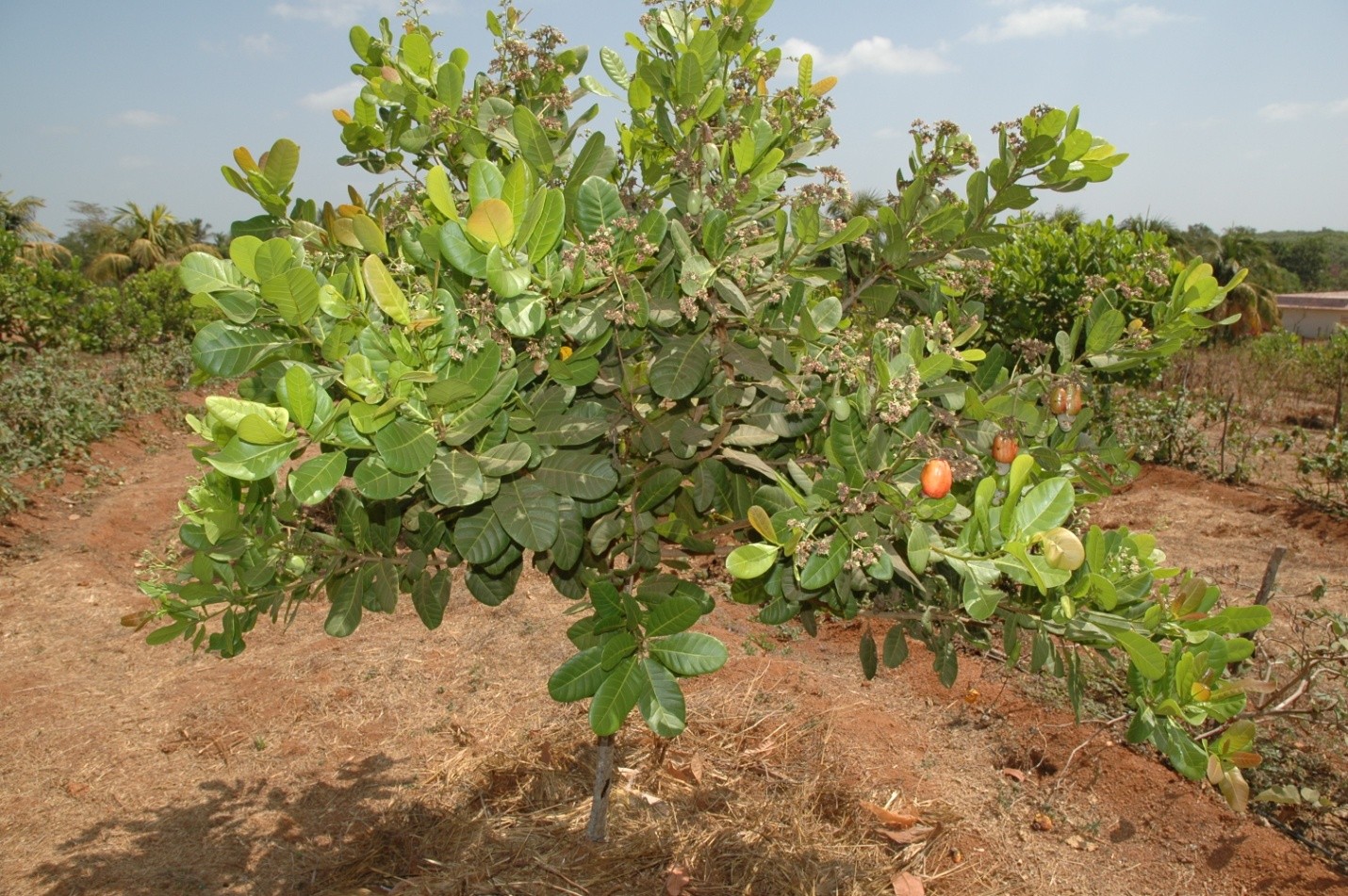
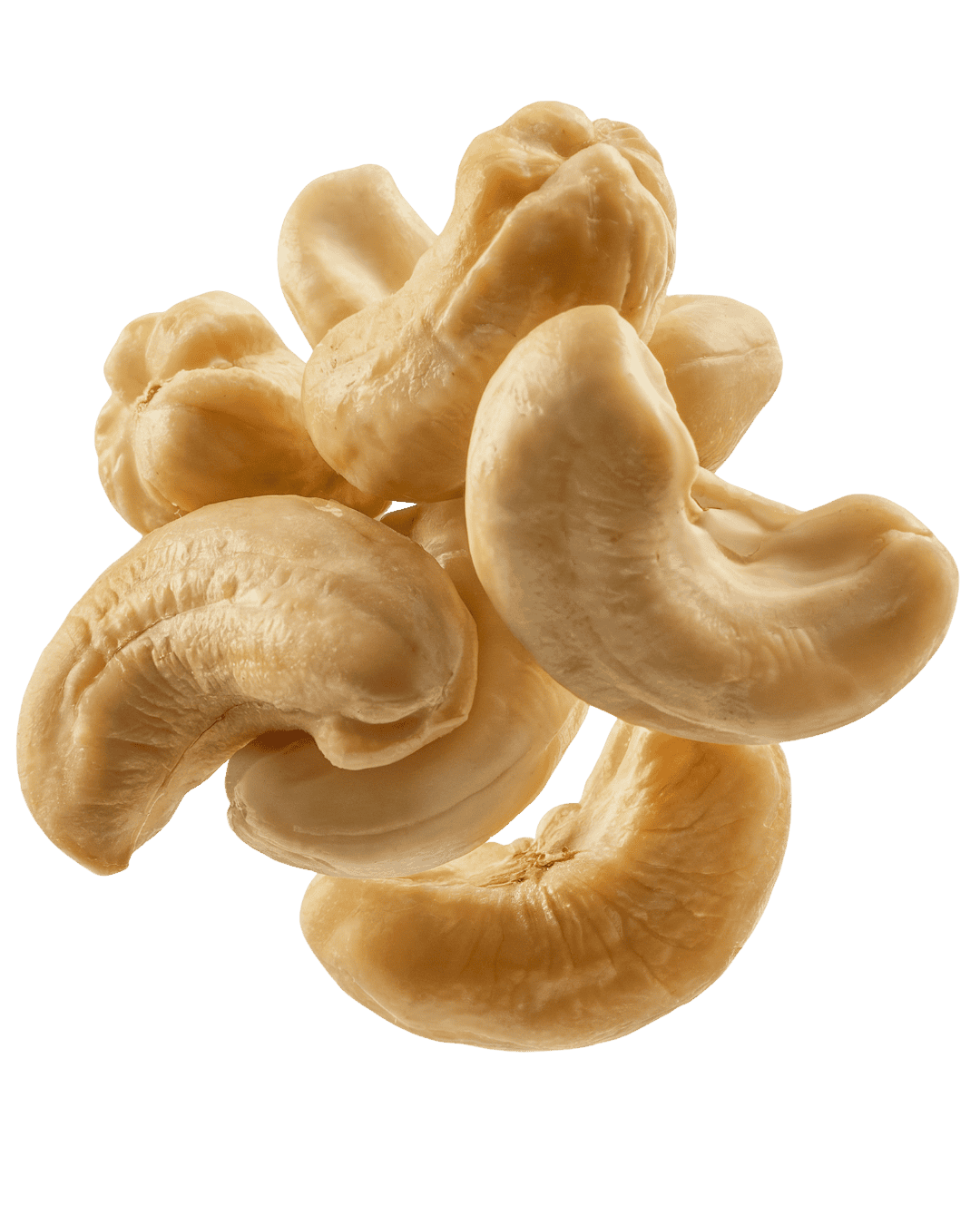
The production of raw cashewnut in India is around 7.94 lakh tones with a productivity of 674 kg/ha (2023-24). It is cultivated in an area of around 11.99 lakh hectares. The processing industries require about 15-20 lakh tons to meet their needs.
Hitherto, the additional requirement was met from the import of raw nuts from Asian and African countries. But this is expected to be reduced in due course of time because of competition from Vietnam and other cashew processing countries, and the development of recent processing set up in cashew growing African countries.
The internal demand for cashew in India is ever increasing. Consequently, there has been a renewed interest in cashew cultivation among farmers. The farmers from non-traditional regions of cashew cultivation such as Chhattisgarh, Jharkhand, plain areas of Karnataka, Andhra Pradesh, Tamil Nadu, Maharashtra and Gujarat have started growing cashew.
Why cashew should be cultivated?
- It can be successfully grown in waste lands thus converting waste to wealth
- Cashew requires least/no irrigation and it can adapt well to red soils of the country
- It does not have significant wild animal menace. This can be boon in hill and coastal areas of the country
- Diseases are not a major concern in cashew as of now.
- It is a less labor-intensive crop. This becomes very significant in view of pressing labor shortage.
- With minimal processing, even farmers can sell kernels that fetch premium price. It doesn’t need sophisticated and costly equipments, and elaborate procedures and inputs for processing.
- The raw cashewnuts after harvest can be kept for at least 6 months without any problem. This gives the opportunity for farmers to bargain good price
- Cashew fruits can fetch significant income to farmers if minimal processing is done (videos of minimal processing of cashew apple can be found at – https://www.youtube.com/playlist?list=PLjESTiPsYB65s1-s_6PENeZg0JQN8RVQr)
- It comes up well in most agro-climatic situations except in cold and frost prone areas. It has got wider adaptability.
- It is a food crop and internal consumption is rapidly increasing which ensures demand for this crop over decades.
- It has got longer economic life (40-50 years) which will benefit the farmers