

Conservation measures
The following are the common ways to conserve pollinator populations
- In general, good beekeeping practices are the best prevention.
- Monitoring decline of pollinators and taking up suitable conservation measures.
- Knowledge on pollination research, bee biology.
- Apiary sites should be selected with much care strong winds, damp, unhygienic conditions and lack of food should be avoided.
- Reduced pesticide usage. Colonies must be protected against poisoning by pesticides.
- Conservation of natural habitats of bees, pollinator friendly sites, gardens etc. It is essential to locate the nesting sites of the common pollinator species and make efforts to conserve them. Non-Apis bees which are solitary require entirely different kinds of nesting sites like dried stems, twigs, ground surface without vegetation etc. Out of ignorance, these nesting sites are often disturbed and the bees are destroyed which needs to be avoided.
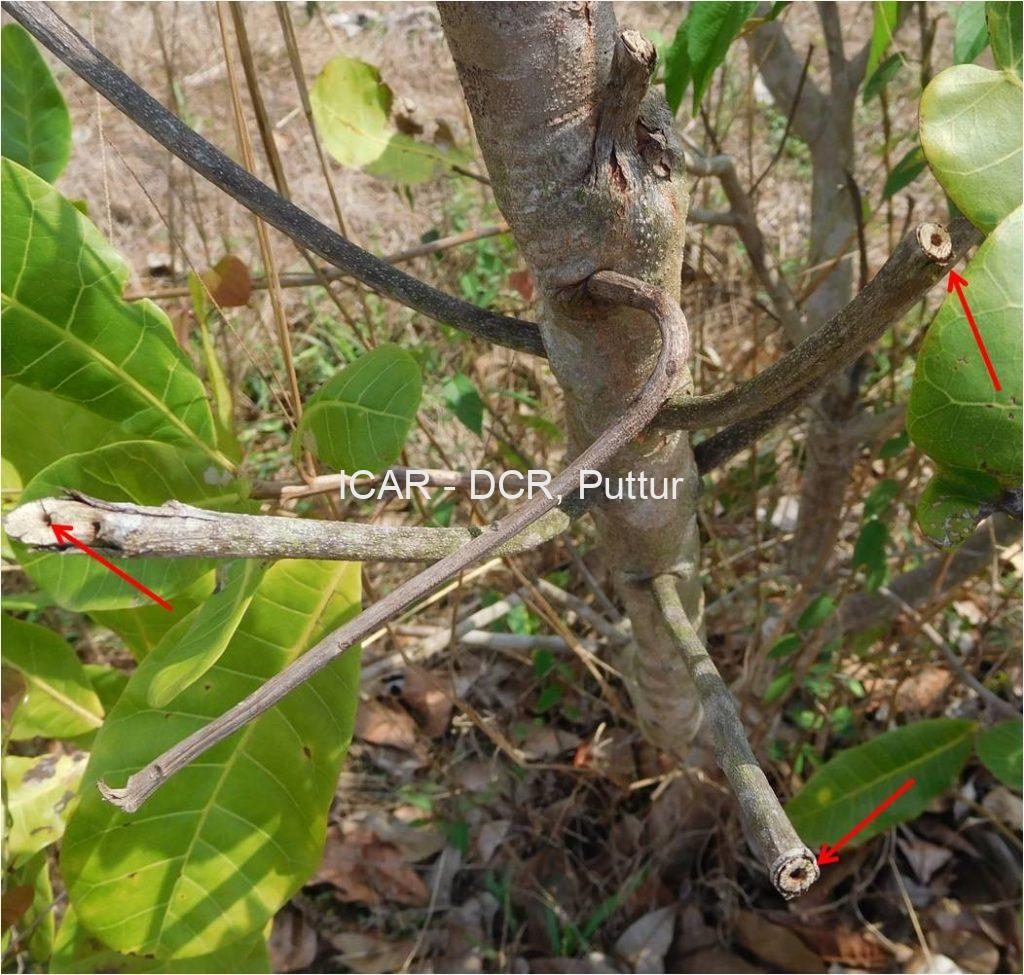
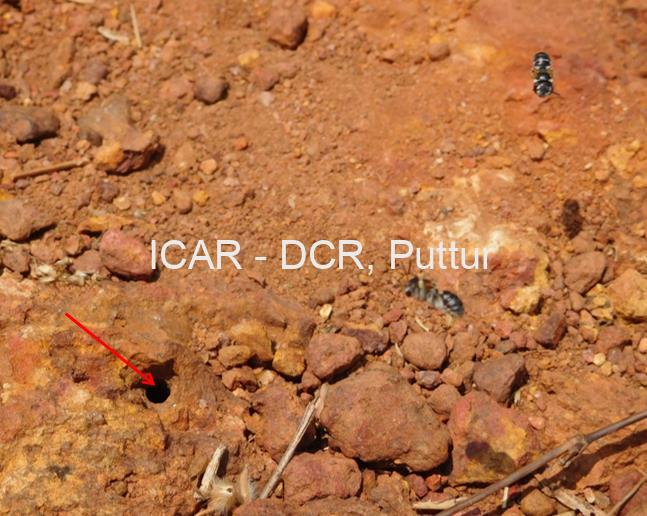
Nesting sites for Braunsapis spp. and Ceratina spp. b. nesting sites for P. oxybeloides
- Maintenance of suitable bee flora and wild forage. Bee conservation and management by bee flora is inexpensive and adopted activities can also improve the aesthetic value of the landscape. Simple step involves, leaving one or two metre strips in the borders of the farmland to host all year round food resources for the bees, as well as safer sites for nesting, mating, resting and refuge from natural enemies. During flowering, farmers should manage pesticide usage carefully to avoid poisoning flower-visiting bees. Farmers should also minimize pesticide drift from the field to adjacent areas.
- A study in Brazil showed that, cashew nut yield was highest when plantations bordered a small forest fragment and were close to the large forest fragment. Deforestation in the areas surrounding cashew plantations prevented effective pollinators from visiting cashew flowers led to reduction in yield. Pollination deficit could cause low yields in cashew. It was concluded that the increasing number of wild pollinator visits will increase yield of cashew, for which proximity to large forest fragments is important.
- Using artificial nesting sites/ trap nests for native bees. Artificial nesting sites can be prepared by drilling holes of 2-5 mm dia. into wooden pieces. Ideally any soft wood can be used. In these pieces, as many holes as possible may be drilled using the corresponding drill bits and an electric drill. The trap nests can be placed before flowering of the crop so that solitary bees start nesting.
- Timely management of pests, diseases and parasites of bees.The vast Asian land-mass carries millions of feral nests of native species, constituting great reservoirs of pathogenic microorganisms and parasites. Though, it is nearly impossible to keep honey bee colonies free of diseases and parasites for long periods of time, care must be taken to take up suitable control measures timely and maintain healthy vigorous colonies.
- Raising awareness of neighbours, farmers and others about the benefits of the bees.
Artificial bee nests for wild bees, Braunsapis sp.
Artificial bee nests consist of small wooden blocks have been developed at ICAR-DCR, Puttur for an important cashew pollinator viz., Braunsapis spp. Neat circular holes of 1.5 – 5 mm diameter and 7-9 cm length were made in the wooden blocks and the blocks were arranged in a stand as in figure 29. Besides, thin sticks of bamboo, Lantana camara, Cenchrus sp., and cashew of 15 -20 cm length were made as small bundles and kept in-between. It was observed that, bigger holes in wooden blocks were occupied by Megachilids, Ceratina sp. besides a lot of wasps and Tetragonula sp. Whereas, medium sized holes (1.5 to 3 mm dia.) were successfully occupied by Braunsapis sp. (> 60 %) during the course of time. The tiny sticks with holes especially of bamboo and Cenchrus sp. were also well occupied by Braunsapis sp. Thus, establishing such artificial bee nests could help in conserving these bees which in turn help in pollination of cashew and other plants.
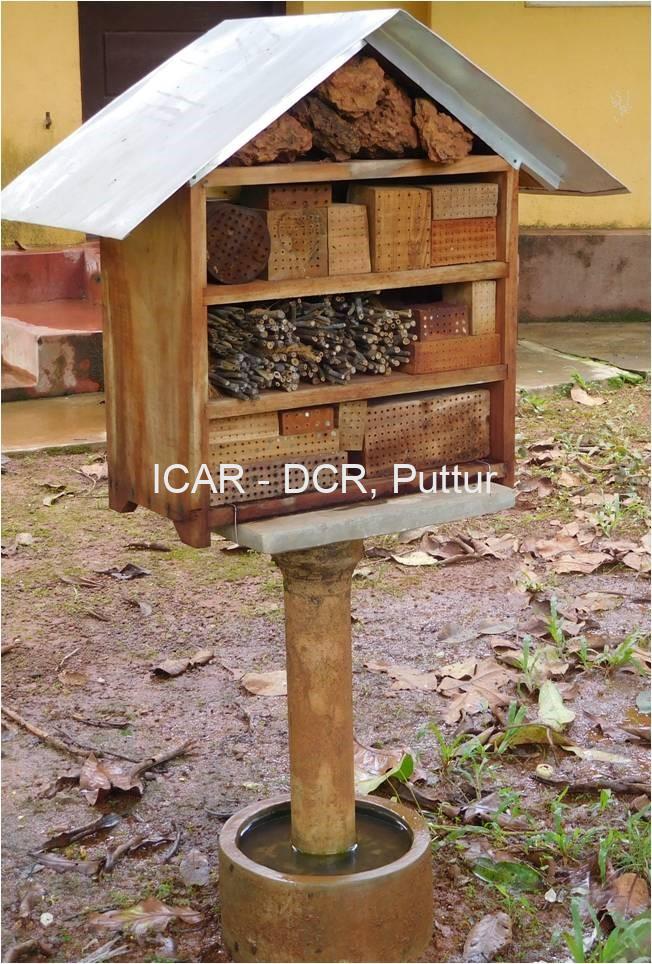
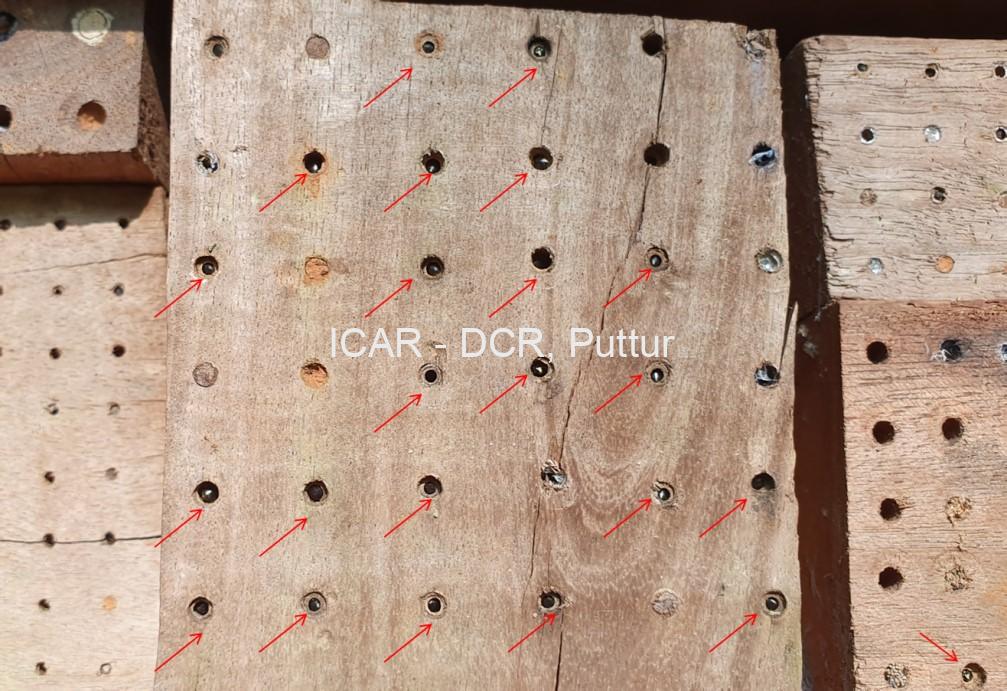
Artificial bee nest
Occupation of nests by bees